ServicesCeiling Repair
Ceiling Repair in Garden City
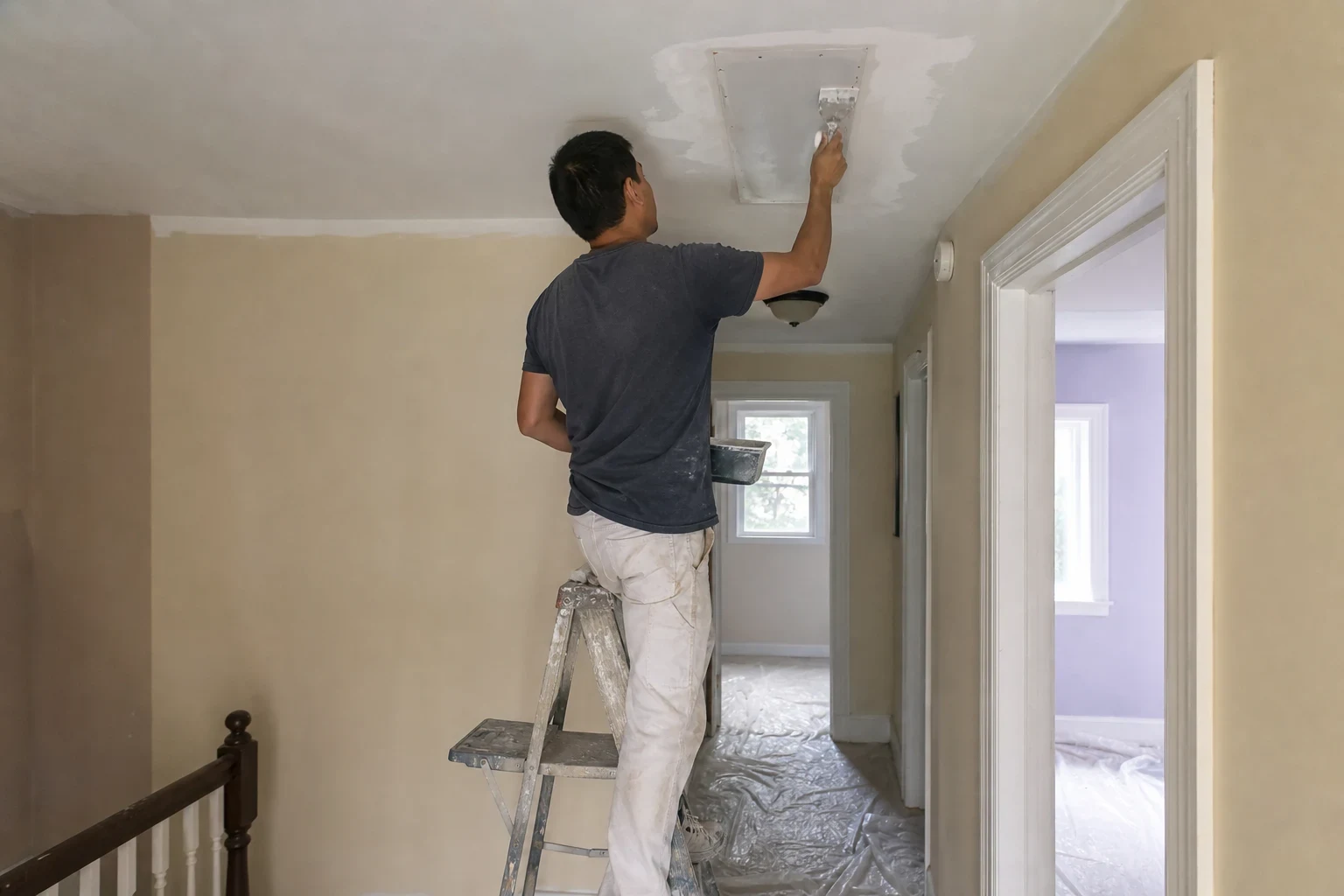
A stained, cracked or sagging ceiling usually means something above it failed first. We find the extent of the damage, replace what can't be saved, and finish the repair flat and textured to match. If water caused it, we photograph everything so your insurance claim starts on solid ground.
What ceiling repair involves
Ceilings fail differently than walls. Gravity works against every repair, so a patch that would hold on a wall can sag or crack overhead. We fasten new drywall to the joists with screws spaced for ceiling loads, add backing where a seam falls between framing, and use setting-type compound in the first coats because it cures harder and shrinks less than premixed mud.
Most of the ceiling work we see starts with water: a leaking pipe or tub drain upstairs, an overflowing toilet, or an attic leak. Wet gypsum loses its strength, the paper face separates, and the board bows between joists. Once that happens, drying it out doesn't restore it. The damaged section has to come out.
We also repair nail pops, cracked tape joints and holes left after electrical or fixture work. If your walls need attention too, our wall repair and drywall patching pages cover that work.
What the ceiling job covers
Moisture readings first
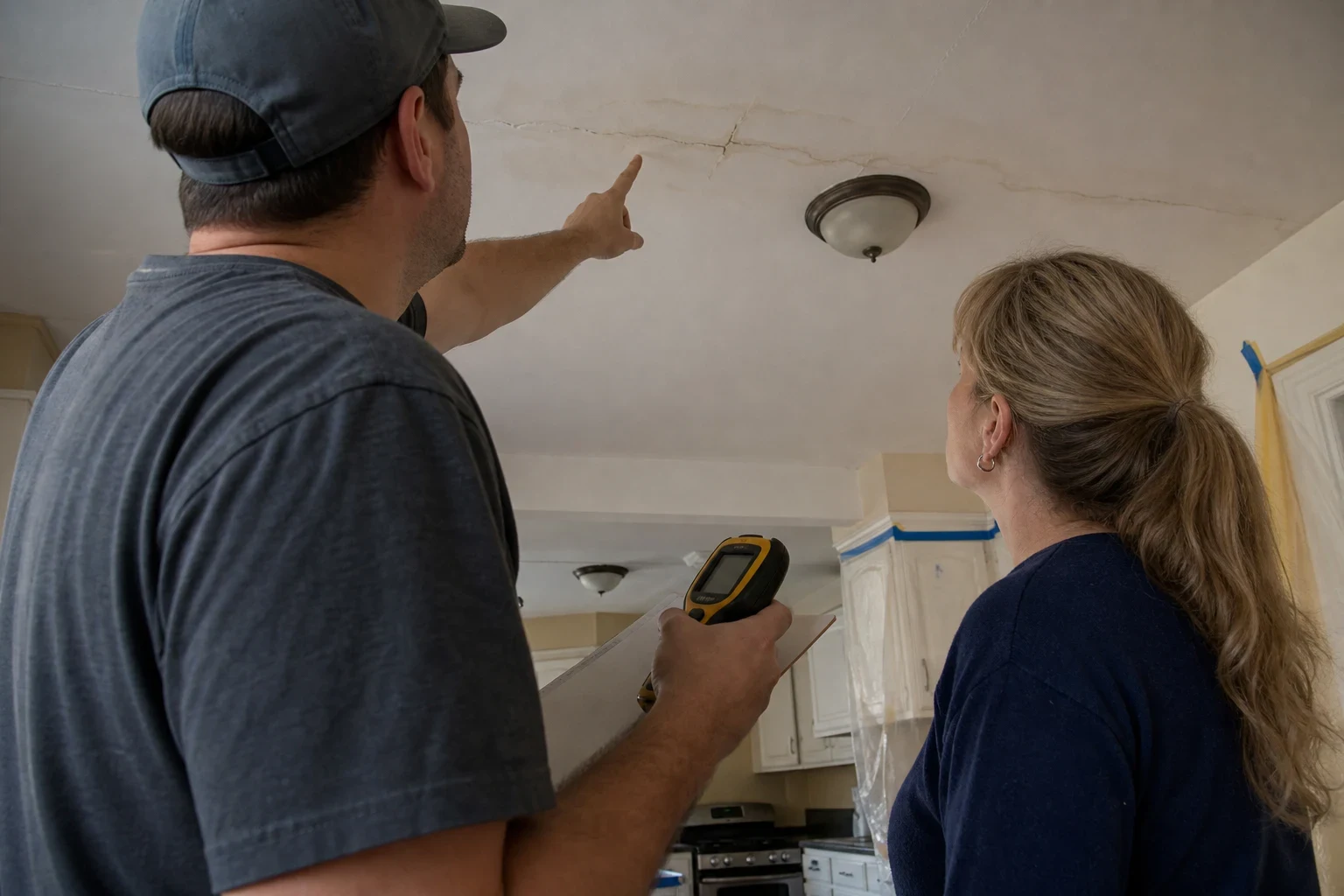
A moisture meter tells us how far the water spread through the drywall. The wet area is often bigger than the stain, so we cut to dry board based on readings, not guesses.
Taking out the damaged board
We cut the failed piece back to the closest joists so every edge of the new board sits on solid framing. If the insulation above is wet, we show you so you can decide how to handle it.
New drywall, fastened right
The new board matches the existing thickness, typically 1/2 inch or 5/8 inch, and is screwed at ceiling spacing so the patch won't sag or pop down the road.
Tape and finish coats
Seams are taped with paper or mesh and get several coats spread out wide, so window light skimming across the ceiling won't reveal a bump.
Matching the texture
We blend the new piece into smooth, knockdown, orange peel or popcorn ceilings. Popcorn in older homes may contain asbestos, so we bring up testing before touching it.
Primer, paint touch-up and cleanup
New drywall gets primer so it won't show through, followed by a paint touch-up over the repair. We leave the work area clean.
Ceiling problems that call for repair
- Yellow or brown stain rings
- A stain tells you water got into the drywall. Once it dries the board can still be soft, and regular paint won't keep the stain from coming back through.
- Drooping between the joists
- The gypsum core has weakened, most often from water. A drooping section can fall, so keep everyone out from underneath until it's fixed.
- Cracks following the seams
- A straight crack along a seam means the tape has let go, usually from movement or shifts in humidity. Caulk or paint over it won't hold up.
- Lines of nail pops
- Rows of little round bumps are fasteners working loose. You see them a lot in older ceilings that were nailed up rather than screwed.
- Paint that peels or bubbles
- Blistering paint on a ceiling, especially in or below a bathroom, often points to moisture reaching the board underneath.
How a ceiling repair runs
- 1
Phone conversation
You tell us what you see, where it is and what caused it if you know. We ask whether the source of the leak has been fixed, since repairing drywall over an active leak wastes your money.
- 2
Inspection and documentation
We meter the area, photograph the damage before anything is cut, and give you a written estimate broken into line items. If you're filing a claim, those photos and line items are what an adjuster typically wants to see. We explain the process, but the adjuster decides coverage.
- 3
Protect the room and remove
We cover floors and furniture, set up plastic to contain dust, and cut out the damaged drywall. Debris goes out the same day it comes down.
- 4
Hang, tape and finish
New board goes up, seams are taped, and compound goes on in coats with drying time between them. Most ceiling repairs take two or three visits for that reason.
- 5
Texture, prime and clean up
We match the texture, prime, touch up the paint and clean the work area, then walk you through the finished repair.
What affects the cost of ceiling repair
Price depends mostly on how much drywall has to come out and how hard it is to match what's left. We don't quote a number until we've seen the ceiling and metered it. Your written estimate lists each part of the job so you can see where the cost comes from.
- Size of the damaged area
- A nail pop is a small job. A section of soaked ceiling that runs across several joists needs more board, more seams and more finishing coats.
- Ceiling texture
- Smooth ceilings need the most careful finishing to hide a repair. Knockdown and popcorn take extra steps to blend, and popcorn may need testing first.
- Height and access
- Stairwells, vaulted rooms and high ceilings need scaffolding or taller ladders and take longer to work safely.
- Plaster versus drywall
- Many older homes around Garden City have plaster ceilings. Tying drywall into plaster takes shimming to match the thickness, which adds labor.
Ceiling repair questions
- Can you repair the ceiling before the leak is fixed?
- We can inspect and document the damage right away, but we won't close up the ceiling until the source is repaired and the area has dried. New drywall over an active leak will fail the same way the old board did.
- Will my homeowners insurance pay for this?
- That depends on your policy and the cause. Sudden water damage, like a burst supply line, is often treated differently than a slow leak. We provide dated photos, moisture readings and a line-item estimate you can send your insurer, and we'll explain what each line covers. Whether it's approved is the adjuster's decision.
- Will the repair be visible?
- Our goal is a finish you can't pick out from below. Matching texture and feathering compound wide makes the patch disappear in most lighting. On smooth ceilings with strong side light from windows, we'll tell you up front what to expect.
- How messy is ceiling work?
- Cutting and sanding overhead does make dust, so we cover the floor and furniture, hang plastic at doorways and clean up at the end of each visit. Expect the room to be out of use while the work is underway.
- Do you work in nearby towns?
- Yes. Along with Garden City we take ceiling repair calls from Mineola, Hempstead, East Meadow and other surrounding towns. Our service areas page lists them all.
Get that ceiling looked at
Tell us what you're seeing overhead and what caused it. We'll set up a visit, document the damage and give you a written estimate.