ServicesSurface Preparation and Sanding
Surface Preparation and Sanding in Garden City
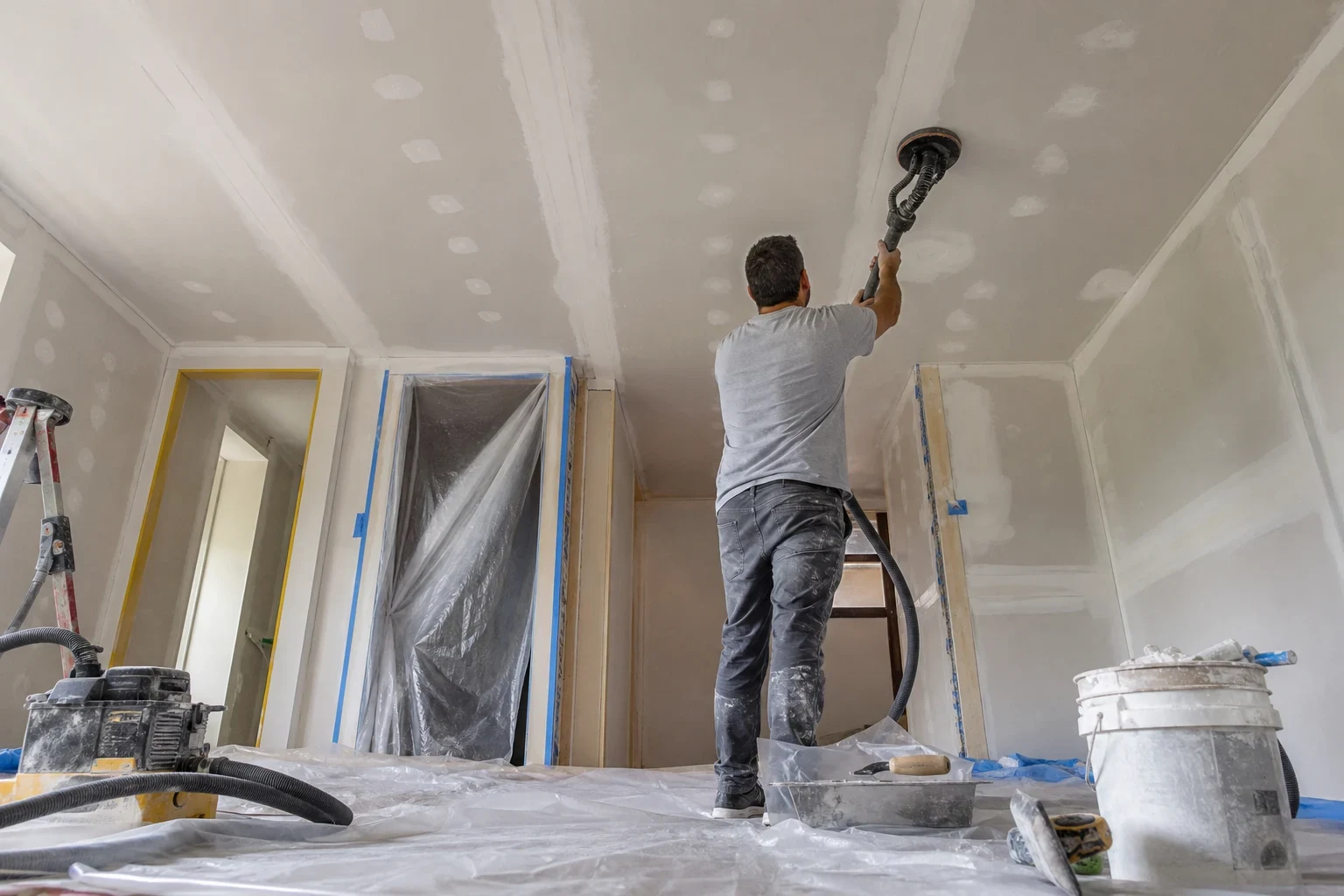
Paint only looks as good as the surface under it. We repair dents, cracks and old patches, skim rough areas, sand to a flat finish and prime the right way, with dust contained and your home kept clean while we work.
What Surface Prep Actually Fixes
Surface preparation covers everything that happens to a wall or ceiling before the finish coat goes on. That means filling gouges and nail pops, feathering out old patches, skim coating textured or torn paper, sanding it all flat and sealing it with the correct primer. Leave any of it out, and every ridge and flash spot shows the moment light rakes across the wall.
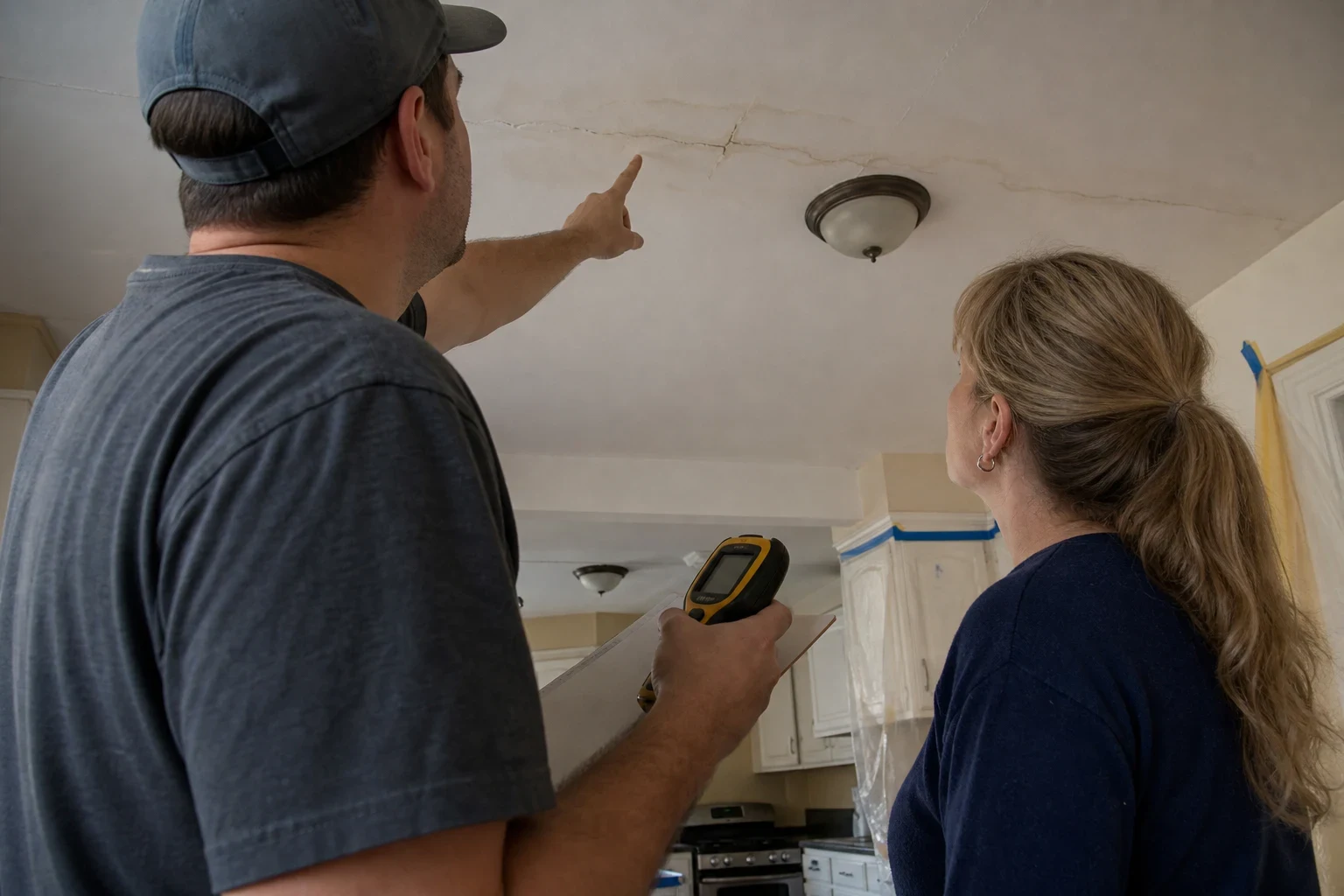
We look at why the surface failed before we sand anything. A crack over a door header usually means framing movement and needs mesh tape, not just more compound. A brown ring on a ceiling means a leak above that has to be confirmed dry, then sealed with a stain-blocking primer so it does not bleed through.
If a leak or other sudden damage led to your call, we photograph the surface before and during prep and give you a written line-item estimate. That gives your adjuster a clear record to review. Whether the claim is approved is their decision, and we say so plainly.
What Our Prep and Sanding Work Includes
- 01
Inspection under raking light
We hold a work light low against the wall to show every ridge, dent and tape seam. You see what we see before any work is agreed.
- 02
Filling and repair
Nail pops are reset with screws and spotted. Dents and gouges get a setting-type compound, which cures by chemical reaction instead of air drying, so deep fills hold their shape and sink far less than ready-mixed mud.
- 03
Skim coating
Walls with torn face paper, old wallpaper glue or uneven texture get thin coats of lightweight compound over the whole area. Torn paper is sealed first so it does not bubble under the wet mud.
- 04
Sanding with dust control
We sand with fine-grit screens and sponges, often using a sander connected to a HEPA vacuum. Floors and furniture are covered, and doorways are sealed with plastic when the job calls for it.
- 05
Priming matched to the surface
Bare compound and new paper get a drywall primer so the finish coat does not flash. Water stains and smoke marks get a stain-blocking primer instead.
Questions about Surface Preparation and Sanding?
Call(516) 518-4638Signs Your Walls Need Prep Before Anything Else
Visible seams and tape lines
If you can see where the drywall sheets meet, the joints were never feathered wide enough or the tape is lifting. Paint alone will outline them.
Old patches that show
A patch that looks like a raised square or a dull spot needs to be skimmed out and blended into the wall around it.
Peeling or flaking paint
Paint that lifts in sheets has lost its bond, often from moisture or a glossy coat underneath. It has to be scraped back to a sound edge and sealed.
Torn paper and wallpaper residue
Removing old wallpaper often tears the drywall face and leaves paste behind. Both cause blistering if they are covered without sealing.
Stains that keep returning
A water or smoke stain that shows through fresh paint needs a stain-blocking primer, not another top coat.
How a Prep and Sanding Job Runs
- 1
Walkthrough and written estimate
We inspect the rooms, mark problem areas and explain the cause of each one. You get a line-item estimate, plus photos if insurance is involved.
- 2
Protect the room
We cover floors, mask trim and outlets and set up plastic barriers where dust could travel. Furniture you cannot move gets wrapped in place.
- 3
Repair, fill and skim
Deep repairs get setting compound first, followed by lighter coats. Each coat dries fully before the next, which is why most jobs take more than one visit.
- 4
Sand and check
We sand each coat flat, then check again under raking light. Low spots get another pass instead of being left for paint to hide.
- 5
Prime and clean up
We apply the right primer, vacuum surfaces and floors and remove the protection. You get a clean work area ready for the finish coat.
What Changes the Price of Prep and Sanding
Your estimate follows the shape the surface is in more than the size of the room. Two bedrooms with the same footprint can need very different amounts of compound, drying time and sanding. We explain each line on the estimate so nothing appears later.
- Condition of the surface
- A few nail pops cost far less than skim coating walls with torn paper or heavy texture. Full skim work adds coats and drying days.
- Ceilings versus walls
- Overhead sanding is slower and needs more protection below. High ceilings and stairwells add staging time.
- Stains and primer type
- Stain-blocking primers cost more than standard drywall primer and sometimes need two coats over heavy staining.
- Older paint and testing
- In homes where paint may predate 1978, we raise lead testing before any sanding, and the results can change how the work is done.
- Furnished or occupied rooms
- Working around furniture and daily life means more masking and more careful dust barriers than an empty room.
Common Questions About Prep Work
Will sanding spread dust through the rest of the house?
Joint compound always throws off some fine dust, but we keep it in the room we are working in. Doorways get plastic barriers, floors and furniture are covered, and we sand with vacuum-assisted tools where possible. We vacuum at the end of each day instead of leaving it all for the last visit.
Can you prep the walls if I plan to do the painting myself?
Yes. Many customers hire us for the repair, sanding and priming and then handle the finish coats on their own. We tell you which primer went on and how long to wait before painting.
Will my insurance pay for surface prep after water damage?
It depends on your policy and your adjuster, so we cannot promise coverage. What we can do is photograph the damage, note the cause we found and give you a line-item estimate that separates prep from other repair work. That makes the paperwork easier to review.
Why does the job take more than one day?
Joint compound has to dry fully before it can be sanded and recoated. Deep fills and skim coats often need a day between passes, more in humid summer weather. Rushing it leads to shrinkage and cracks that show through later.
Do you match existing wall texture?
Yes. If the surrounding wall has texture, we match it after repairs so the area blends in. Smooth walls are skimmed and sanded flat instead.
Get Your Walls Ready the Right Way
Tell us what the surface looks like and what caused it. We will explain what prep it needs and walk you through the estimate by phone.