ServicesDrywall Hanging
Drywall Hanging in Garden City
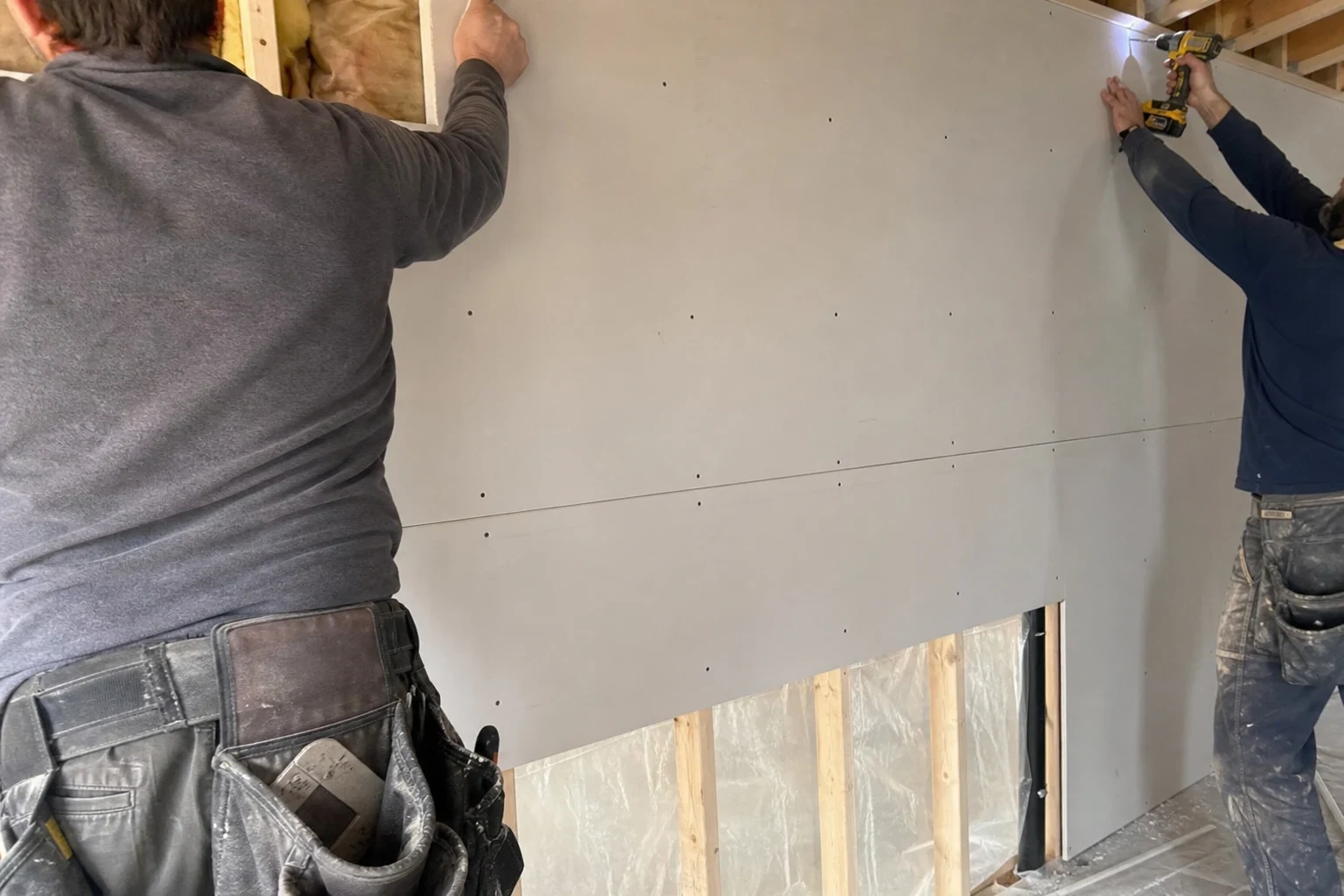
We hang new drywall on open studs and ceiling joists: renovations, basement rooms, and walls cut out after a leak. We choose the board for each room, fasten it to spec and stagger the joints. If an insurance claim is involved, we document the work so your adjuster sees what was replaced.
Full sheets on open framing
This service covers installing whole sheets of gypsum board directly on studs and joists, rather than repairing a damaged spot in a wall that is otherwise sound. It fits when the old surface is gone or not worth saving: a gut renovation, a new partition wall, an unfinished basement, or a section of wall or ceiling the water mitigation crew removed to dry the cavity.
How the board goes up decides how the finished wall looks. Sheets need to land on framing at every edge, butt joints need to be staggered so they don't stack into one long crack line, and screws need to sit just below the paper face without tearing it. Get those right and the taping and finishing go smoothly. Get them wrong and no amount of joint compound hides it.
Many older homes around Garden City have plaster walls, and new drywall often has to meet plaster at a doorway or ceiling line. We shim the board to match the plaster's thickness so the transition finishes flat instead of leaving a ridge.
What our drywall hanging covers
The right board for every room
Most walls get standard 1/2-inch board. Ceilings prone to sagging get 5/8-inch, bathrooms and laundry areas get moisture-resistant board, and fire-rated spots such as a wall between the garage and the house get 5/8-inch Type X.
Checking the framing first
A straightedge laid across the studs and joists shows us any that are bowed or twisted. A crowned stud turns into a visible bulge once the wall is finished, so we point it out and discuss it with you before it gets covered.
Screws placed and set properly
We hang ceilings before walls and space ceiling screws tighter than wall screws. A clutch on the driver sets each screw just into the paper without tearing it, which is what stops nail pops from appearing a season later.
Clean cutouts around boxes and fixtures
We mark every outlet, switch, recessed light and air vent before lifting a sheet, then cut each hole to fit. Board cut snug to the box takes less compound, and cover plates sit flat on the wall.
Corner bead and joints ready for tape
Outside corners get metal or paper-faced bead, and every joint is left ready for taping. If you'd like one crew from bare studs to a primer-ready wall, our drywall finishing service takes it from there.
Daily cleanup
We cover the floors and anything left in the room before cutting starts, and we clear offcuts, screw boxes and gypsum dust every day.
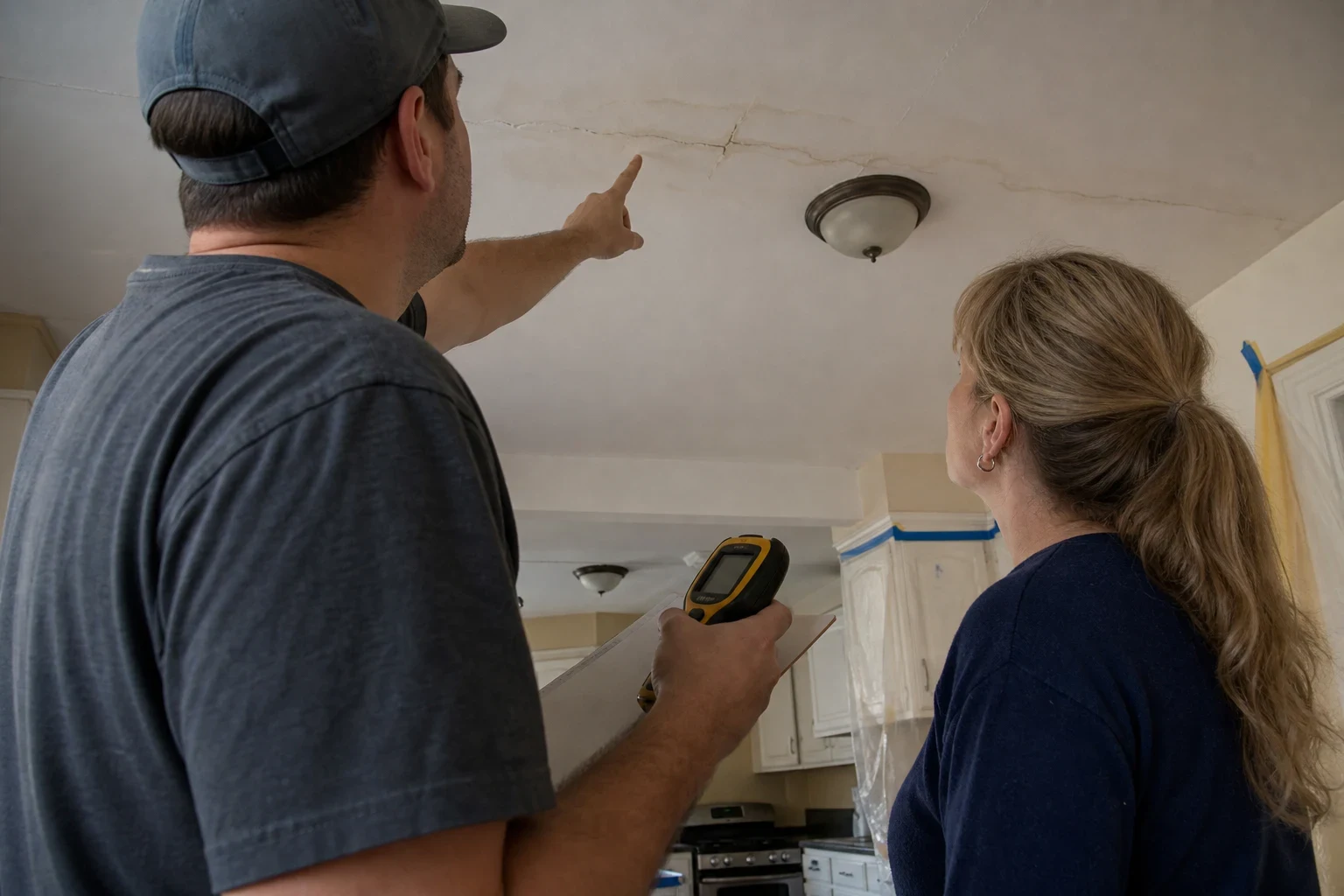
Signs you need new drywall, not a patch
- Wet board that stayed wet
- Gypsum that soaked for more than a day or two loses strength and can grow mold on the paper facing. If the board crumbles when pressed or smells musty, it should come out and be replaced with new sheets.
- Walls already opened for mitigation
- After a leak, the drying crew often cuts wall sections out up to a set height. Those openings need full panels hung and finished, not patches.
- A ceiling that sags between joists
- Ceiling board that droops has usually lost its grip on the fasteners from moisture or weight. Re-screwing rarely holds; new board does.
- Renovation or a new room
- Moving a wall, finishing a basement or building out an attic all leave open framing that needs to be closed in.
- Damage spread across most of a wall
- When cracks, holes and old repairs cover a large area, a full sheet often costs less in labor than many small patches. For isolated damage, our drywall patching service is usually the better fit.
How a hanging job runs
- 1
Look at the space and measure
We check the framing, measure every wall and ceiling, and note wet areas, fire-rated walls and where new board meets old plaster. You get a written, line-item estimate listing the board types and square footage.
- 2
Document for your claim
If the work stems from an insurance loss, we photograph the open cavities and the damaged material and break the estimate down so an adjuster can follow it. We explain what usually gets reviewed, but your adjuster decides coverage.
- 3
Protect the room and hang ceilings first
Floors are covered and the area is closed off. Ceiling sheets go up first so the wall board below supports their edges, then walls are hung with long sheets to cut down the number of butt joints.
- 4
Inspect fastening and hand off to finishing
We check every sheet for missed framing, loose edges and overdriven screws before taping. From there the drywall finishing stage begins, followed by surface preparation and sanding before you prime.
What moves the cost of hanging drywall
Square footage is the starting point, but it is rarely the only thing that sets the price. Your written estimate shows each of the factors below as its own line, so you can see where the money goes before any board is ordered.
- Board type
- Thicker fire-rated sheets and moisture-resistant panels carry a higher material price than ordinary half-inch board. Their extra weight also slows the lifting, most of all on ceilings.
- Ceiling height and access
- Tall ceilings, stairwells and tight basement stairs slow the work and may call for scaffolding or cutting sheets down to fit through doorways.
- Framing condition
- Bowed studs, uneven joists or old lath that has to come off first add time before the first sheet goes up.
- Cutouts and corners
- A room with many outlets, recessed lights, soffits and outside corners takes longer than a plain rectangle of the same size.
- Matching existing walls
- Shimming new board to meet thicker plaster, or blending into an old ceiling, adds labor at every transition.
Drywall hanging questions
- Will my insurance pay to replace drywall after a leak?
- That depends on your policy and what caused the leak, and only your insurer can decide it. What we can do is photograph the damage and the open wall, list the replacement work line by line, and explain it to your adjuster if asked. That gives the claim a clear record to work from.
- Do you finish the drywall too, or just hang it?
- We can do both. Hanging and finishing are separate stages, and many people have us carry the job from bare studs through taping, mudding and sanding. If someone else is finishing, we leave the joints clean and ready for tape.
- Why use 5/8-inch board on some ceilings?
- Thicker board resists sagging between joists, particularly with wider joist spacing or a heavy texture. It is also the standard for fire-rated assemblies, such as the wall and ceiling between an attached garage and living space.
- How long until the room is usable again?
- Hanging itself goes quickly for a typical room. The longer part is finishing, since each coat of joint compound needs to dry before the next. We give you a realistic schedule for both stages when we write the estimate.
- Do I need a permit for new drywall?
- Replacing drywall in kind often does not, but new walls, basement finishing and larger renovations commonly do. Rules vary by village and town, so we tell you what we expect your project needs and work within the permit if one applies.
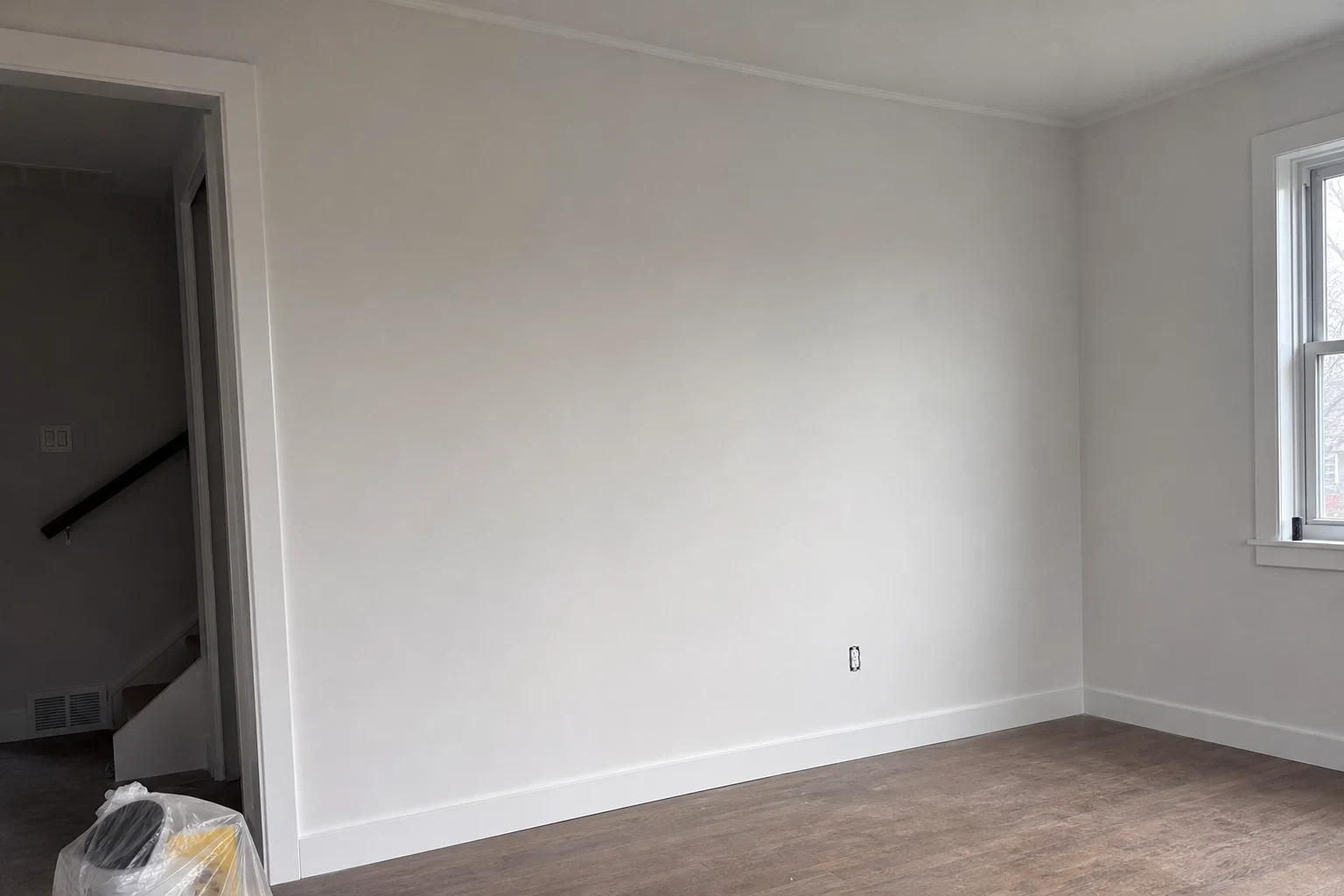
Ready to close up those open walls
Tell us what is open, what caused it and whether a claim is involved. We will explain the board, the steps and how we document the work.