ServicesPaint Touch-Ups
Paint Touch-Ups in Garden City
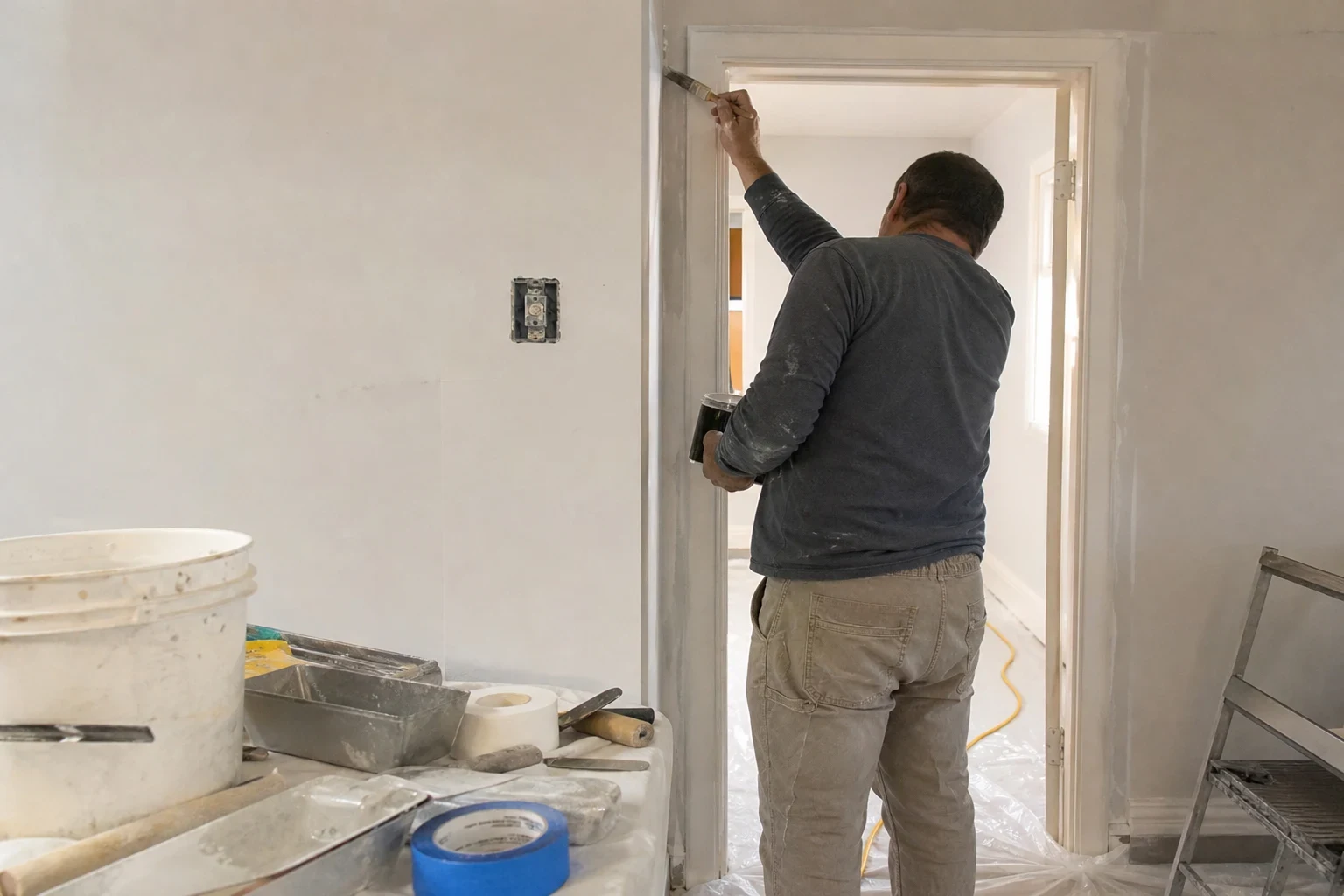
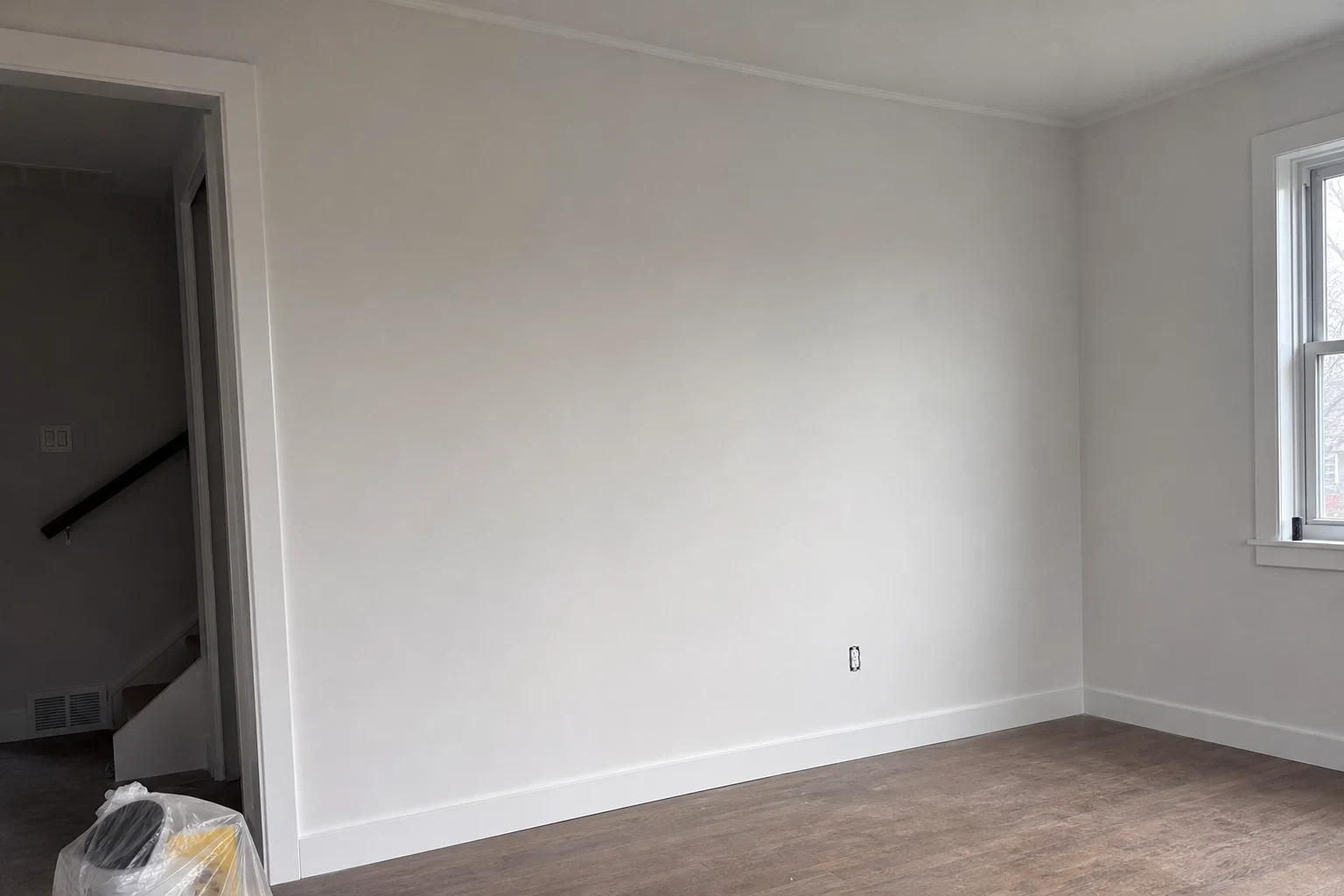
A drywall repair is only finished when you can't find it. We prime the patch, match your existing color and sheen, and feather the paint out so the spot blends under daylight and lamplight. If the damage is part of a claim, we photograph it before we start.
Why a Touch-Up Takes More Than a Brush
Most failed touch-ups come down to two problems. Either the color is a shade off, or the sheen is wrong, and the spot "flashes" dull or glossy when light crosses the wall at a low angle. Raw joint compound adds to it. The mud is porous and pulls binder out of the paint, so the coat over a patch cures flatter and paler than the finish beside it.
We treat the touch-up as the last step of the repair. The patch gets primed, the color is matched to what is on your wall now (not what was in the can years ago, since paint fades and yellows), and the new coat is feathered so there is no hard edge. Often that is all a wall needs.
When a spot sits in the middle of a wide, evenly lit wall, a small dab can still show. In that case we tell you up front and carry the paint to the nearest corner or break line on that one wall, so the eye has no edge to catch.
What Goes Into a Touch-Up
Primer over the patch
New joint compound and any bare paper face are sealed with drywall primer before color goes on, so the finish coat dries to the same sheen as the surrounding wall.
Matching the color
When the original can is around, we compare it to the wall. When it isn't, we remove a small chip from a hidden spot for a computer match and test a swatch before touching the repair.
Matching the sheen
Flat, matte, eggshell, satin and semi-gloss each catch light in their own way. We check the sheen in person, since a correct color in the wrong sheen still stands out.
Feathered edges
Our roller nap matches the stipple already on the wall, and we thin the paint out at the edges so it fades into the old coat without leaving a ridge.
Ceilings and edges along trim
A touch-up over a ceiling repair or along a corner cut line is primed and matched the same way, with careful brushwork where the two surfaces meet.
Cleanup when we finish
We cover floors and furniture, pull the tape off cleanly and leave the room as it was when we arrived.
Signs a Spot Needs a Proper Touch-Up
Repair still visible
Run a hand across it and you feel nothing, yet a pale or flat rectangle stands out. The usual cause is compound painted without primer, or a finish in the wrong sheen.
Flashing at an angle
The wall looks fine straight on, but a shiny or flat spot appears when window light rakes across it.
Earlier touch-ups that went wrong
Old dabs of paint that dried darker, or have visible brush marks, often need sanding and a second, matched coat.
Water stains after a repair
A stain from a leak can bleed through ordinary paint. It needs a stain-blocking primer before color goes on, or it returns in a few weeks.
Scuffs and dings near traffic areas
Hallways, stair walls and spots behind doors collect marks that a matched touch-up clears without repainting the whole wall.
How a Touch-Up Visit Runs
- 1
Look and document
We inspect the area and note the color, sheen and texture. If the damage came from a leak or another covered event, we take dated photos before any work so you have a record for your adjuster.
- 2
Prep the surface
We lightly sand the repair, wipe off dust and prime the patch. Stained areas get a stain-blocking primer instead.
- 3
Match and test
We apply a test swatch and let it dry, because wet paint always reads darker. Once it disappears against the wall, we proceed.
- 4
Paint and feather
The finish coat goes on thin and feathered, with a second coat where needed. We check it again under the room's normal light before packing up.
What Sets the Cost of Touch-Up Work
Two things drive the number: how difficult your color and sheen are to match, and how much wall has to be painted before the repair is hidden. We look at the spots in person and write up a line-item estimate. If an insurer is involved, that estimate and our photos can go to your adjuster.
- Number and spread of spots
- Three marks on one wall take less time than single spots in four rooms, since each area needs its own setup and drying time.
- Whether the original paint exists
- A labeled can on the shelf saves a color-matching step. Without it, we sample and test before painting.
- Sheen and wall position
- Satin and semi-gloss show every overlap, so they more often need paint carried to a corner. Flat finishes blend more easily.
- Stains and primer needs
- Water stains, smoke marks or bare compound need specific primers and extra drying time before the color coat.
- Ceiling height and access
- Stairwells and tall ceilings call for ladders or planks and slower, more careful work.
Paint Touch-Up Questions
Something not covered here? (516) 518-4638
My old paint can is gone. Can you still match the color?
In most cases, yes. We lift a small chip from a hidden spot, such as inside a closet or behind a switch plate, and have it computer-matched. Then we brush a test patch on the wall and wait for it to dry before going further, because paint shifts color as it cures.
Will the touched-up spot be noticeable?
On most walls a primed, matched and feathered touch-up blends in. On a large wall with strong side light and a glossy finish, a small spot can still flash. When we see that risk, we tell you before starting and suggest carrying paint to the nearest corner of that wall.
How soon can a fresh drywall patch be painted?
Joint compound must be fully dry before primer goes on, or the paint can crack or blister. Thin patches dry quickly, while deep fills and humid weather slow things down. If we did the patch, we schedule the touch-up around that drying time.
Will my insurance pay for the touch-up after a leak?
That depends on your policy and the adjuster's decision, not on us. What we can do is photograph the damage before work, explain what the repair and touch-up involve, and write a line-item estimate you can hand to your adjuster. Call us and we will walk you through what that paperwork usually covers.
Do you touch up ceilings too?
Yes. Ceilings are often flat white that has yellowed with age, so we match to the aged color rather than fresh white. Ceiling touch-ups usually follow a ceiling repair or a stain from above.
Make the Repair Disappear
Tell us where the spots are, what finish the walls have and whether a claim is open. We will explain what the touch-up needs and set a time to look at it.