ServicesDrywall Patching
Drywall Patching in Garden City
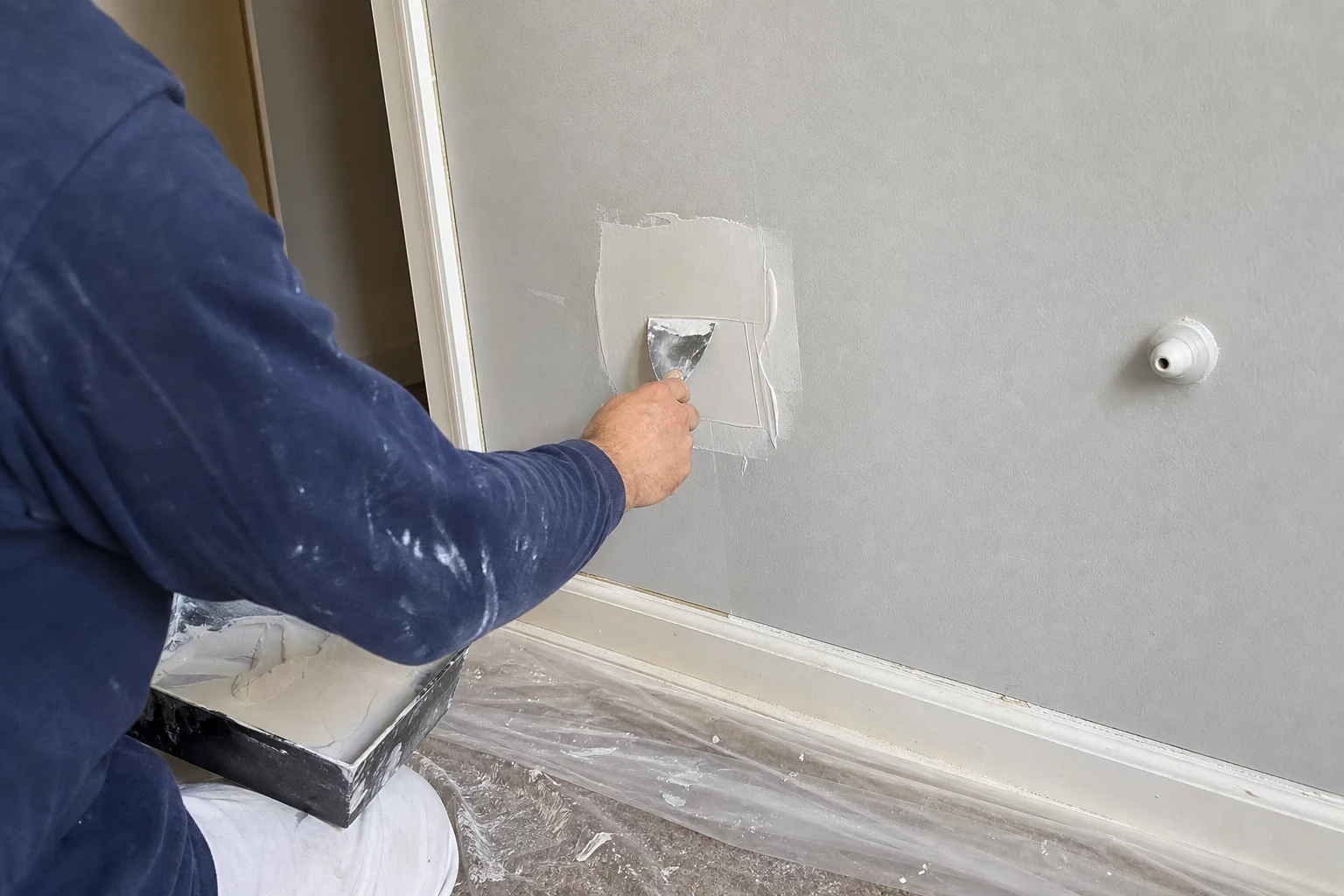
We patch holes, dents and cut-outs in drywall so the repair sits flat, holds firm and blends with the wall around it. You get a properly backed patch, matched texture and a clean work area, plus photos and notes if the damage is part of an insurance claim.
What drywall patching covers
Patching is the right call when the damage is limited to a defined spot: a doorknob punched through, a TV mount pulled out, a cut-out left after an electrician or pipe repair, or a fist-sized dent from moving furniture. The framing behind it is sound, and the rest of the sheet is dry and solid. When damage spreads across a wall or ceiling, or the board is soft from water, our drywall repair or ceiling repair work is the better fit.
A patch fails for predictable reasons. Spackle pushed into a hole with nothing behind it cracks around the edge. Fast-drying compound laid on too thick shrinks and leaves a dimple. A patch that is not feathered wide enough shows as a bump in raking light from a window. We build each patch to avoid those problems, using backing, the right compound for each coat and wide feathered edges.
Many older Long Island houses mix original plaster with later drywall. We check which one you have before cutting, because the patch material and thickness have to match what is already on the wall.
What goes into each patch
- 01
Squaring the damage
We cut ragged holes back to a clean square or rectangle. Straight edges let the new piece fit tight, which means thinner compound and less shrinkage.
- 02
Backing and fastening
Holes larger than a few inches get wood or metal backer strips screwed behind the opening. The patch piece is screwed to that backing so it cannot flex or pop loose when a door hits it.
- 03
Matching board thickness
Walls are usually half-inch board, some ceilings and garage walls five-eighths. We use the same thickness so the patch sits flush instead of proud or recessed.
- 04
Setting compound, then topping
The first coat over the tape is a setting-type compound that hardens chemically and resists cracking. Finish coats are a lighter topping compound that sands smooth and feathers out wide.
- 05
Texture matching and primer
We match orange peel, knockdown or smooth finishes, then prime the patch. Bare compound absorbs paint differently than the wall, and skipping primer leaves a dull spot that shows through paint.
Questions about Drywall Patching?
Call(516) 518-4638Signs a patch is what you need
A hole you can see through
Doorknob strikes and accidental punches break the paper and gypsum. Filler alone will not hold over an open void.
Torn paper around anchors
Pulled shelf brackets or mounts often rip the face paper. Torn paper bubbles under new compound unless it is cut away and sealed first.
An access cut-out left open
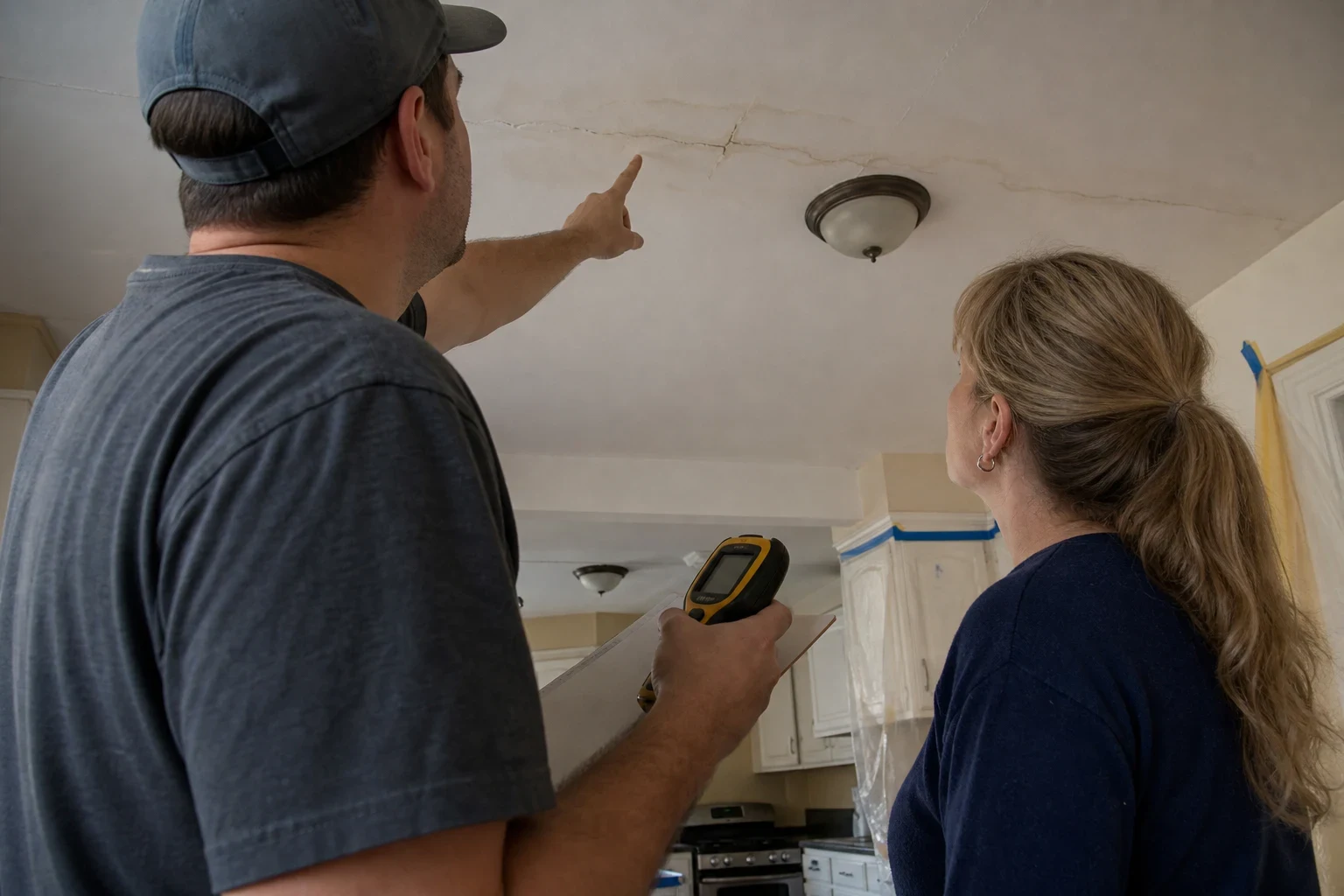
After a pipe or wiring repair, there is often a square hole waiting to be closed. If a water leak caused it, we photograph the opening before patching so you have a record.
An old patch that keeps cracking
A crack outlining a square usually means an earlier patch was never backed or taped. We cut it out and redo it properly.
How a patching job runs
- 1
Phone call and visit
You tell us by phone what happened and where. We look at the damage in person, confirm the wall material and texture, and give you a written estimate.
- 2
Photos before we touch it
If you may file an insurance claim, we photograph the damage and note its size and likely cause. We explain what an adjuster usually asks for, but the coverage decision stays with your insurer.
- 3
Prep and patch
We lay drop cloths, mask nearby trim and outlets, cut the opening square, install backing and screw in the new piece. Tape and the first setting coat go on the same visit.
- 4
Finish coats and sanding
Topping coats need drying time, so most patches take two or three short visits. Sanding is done with dust control, and we vacuum before we leave each day.
- 5
Texture and prime
Once the surface is flat, we apply matching texture and primer. If you want color applied over it, our paint touch-ups service handles that step.
What moves the cost of a patch
Two holes the same size can take very different amounts of labor, so we do not quote a number sight unseen. After we see the damage, we break the job into line items on a written estimate, and you can see where each part of the cost comes from.
- Size and number of holes
- Several small anchor holes take less time than one large opening that needs backing. Grouping patches into one visit keeps the trips down.
- Location
- Ceiling patches and stairwell walls need ladders or staging and more careful dust control, which adds time.
- Texture and wall material
- A smooth wall is simpler to blend than knockdown. Patching into plaster takes different materials and more build-up than drywall.
- Finish and documentation
- Primer is part of a proper patch. Paint touch-ups and insurance photo records are listed separately so you can choose what you need.
Questions about patching
Can anyone tell where the patch was?
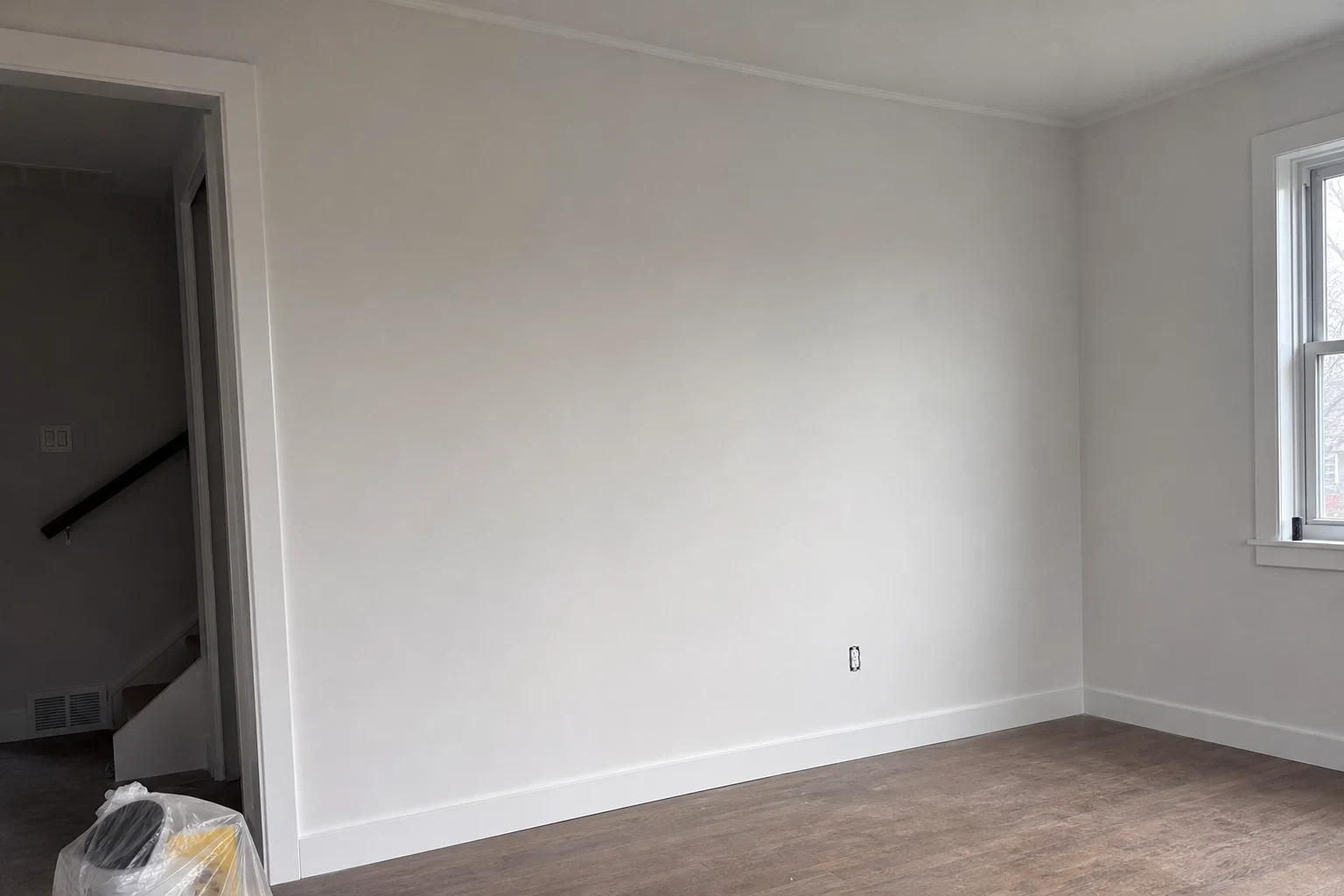
A patch that is primed and feathered correctly is very difficult to find, even in good light. Patches usually give themselves away through mismatched texture or paint rolled straight over bare compound, and we handle both with texture matching and primer. If your paint is very old, a full coat on the wall may still be needed for a perfect blend, and we will say so before we start.
How much time does patching take?
The actual work is brief, but each coat of compound has to dry before the next. Most patches wrap up in two or three visits over a few days, and setting compound speeds up the first coat.
Does insurance cover a drywall patch?
That comes down to your policy and the cause. A sudden event such as a burst pipe is often handled differently than wear or a slow leak. We record the damage in photos and a written description, which is what adjusters typically want, but we never decide or promise coverage.
What if a patch won't do the job?
When the board is soft, stained all the way through or crumbling from water, or the damage covers most of a sheet, a patch won't last. We will explain why and recommend replacing that section through our drywall repair or drywall hanging work instead.
Will patching make a mess?
Sanding produces some dust. We cover the floor and furniture near the patch, control dust as we sand and vacuum before leaving, so you can use the room that evening.
Get that hole closed properly
Tell us what the damage looks like and how it happened. We will set up a visit, give you a written estimate and photograph the damage if a claim is involved.