ServicesWall Repair
Wall Repair in Garden City
We repair cracked plaster, water-damaged drywall, broken corner bead and torn-out anchors, then match the surface so the fix disappears. Before we touch anything, we photograph and measure the damage so you have a clear record if an insurance claim is part of the picture.
Repairing the wall, not just the spot you can see
Wall repair is broader than a single drywall patch. A crack running from a door header, a bulge under a window or a stain spreading along the baseboard usually has a cause behind it: a framing joint moving, a leak that soaked the gypsum core, or plaster keys that have let go of the lath. If we cover the symptom without finding the cause, the damage comes back.
Many houses in the area still have original plaster on wood or metal lath, and others mix plaster rooms with later drywall additions. The two materials fail differently and need different fixes, so we identify which one you have before recommending anything.
When the damage came from a sudden event like a burst pipe or an overflowing tub upstairs, the way it is documented matters. We record what we find in a form your adjuster can use. We do not act as the adjuster or promise what a policy will cover.
What our wall repair work includes
Cause check before repair
We look for the source of the damage: moisture readings on stained areas, checking whether a crack follows a framing joint, and tapping plaster to find loose sections. A repair over wet or moving material will fail.
Plaster crack and delamination repair
Loose plaster is reattached to the lath with plaster washers and screws, cracks are opened and filled with setting compound, and fiberglass mesh is embedded where the wall keeps moving. Badly failed sections are cut out and filled flush with drywall shimmed to the plaster thickness.
Water-damaged drywall replacement
Gypsum that has softened, bubbled or grown mold on the paper face is cut back to sound board and replaced. We back the edges with blocking so the new piece sits flat and does not crack at the seams.
Corner bead and edge repair
Dented or rusted metal bead and cracked paper-faced bead are removed and replaced, then coated so the corner is straight and sharp again.
Texture matching and paint touch-up
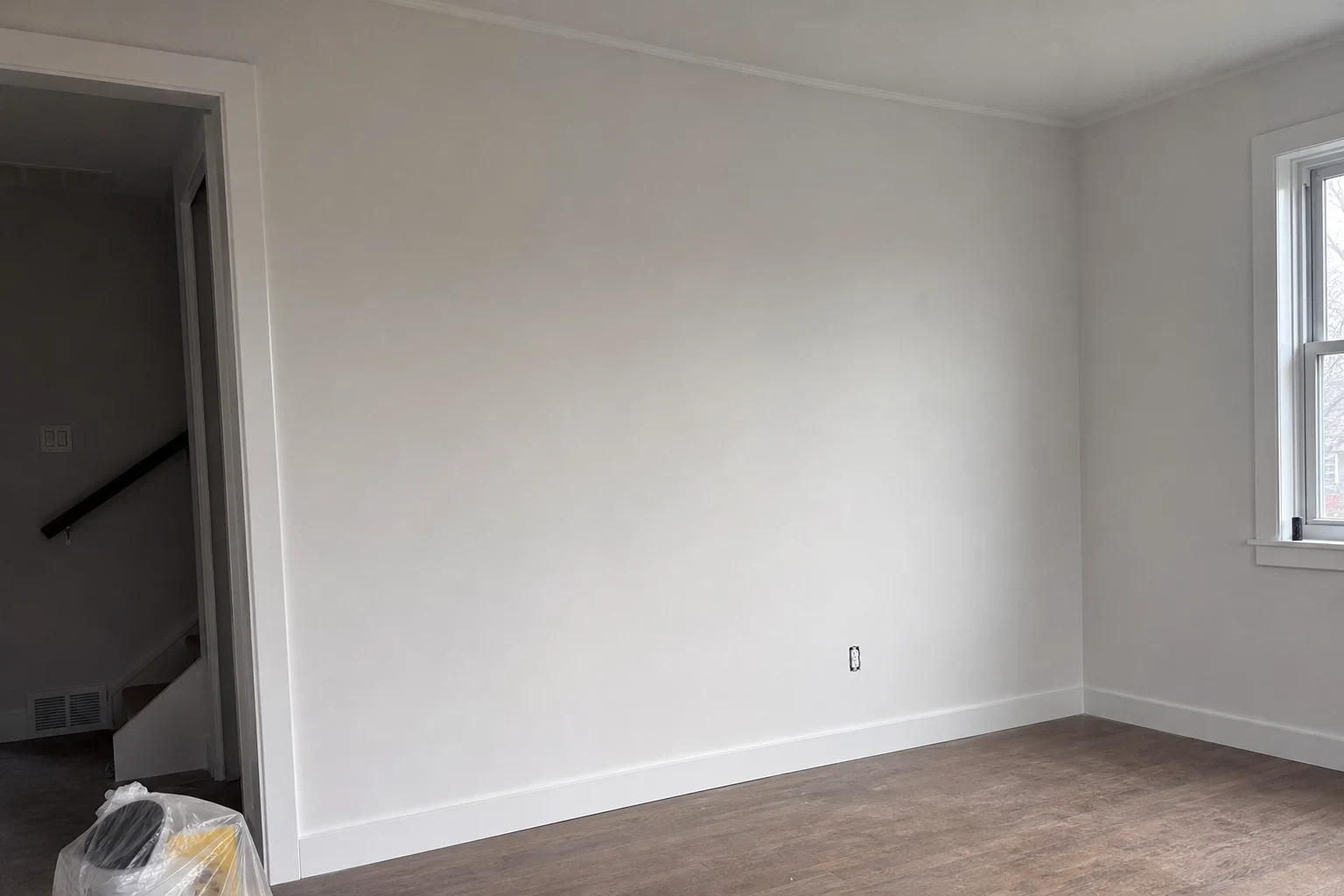
We match smooth, skim-coat or light orange peel textures so the repaired area blends in. A paint touch-up on the repaired section is available once the compound has fully dried and been primed.
Damage documentation
Dated photos before, during and after the work, with measurements and a written note of what we found behind the surface.
Signs your walls need repair
Diagonal cracks at doors and windows
Cracks that run off the corners of openings point to movement at the header. We fill them with flexible mesh and setting compound so they do not reopen as fast.
Brown rings or soft spots
Stains that feel soft or crumble when pressed mean the gypsum core has absorbed water. Painting over them traps moisture and the stain bleeds back through.
Bulging or hollow-sounding plaster
When plaster sounds hollow or pushes in slightly, the keys behind it have broken. Left alone, that section can drop off the lath.
Nail pops in rows
A line of round bumps along a stud usually means the framing dried and shrank or the fasteners were never set right. We reset them with screws and refinish.
Holes from anchors and doorknobs
Shelves pulled out of the wall and doorknob punctures leave torn paper and crushed gypsum that needs backing, not just filler.
How a wall repair visit runs
- 1
Phone conversation
You describe the damage, how long it has been there and whether a leak or accident caused it. That tells us what to bring and whether documentation for a claim is needed.
- 2
Inspection and record
We photograph and measure the area, take moisture readings and probe for loose material. You get a written estimate that lists each repair separately.
- 3
Protect and prep
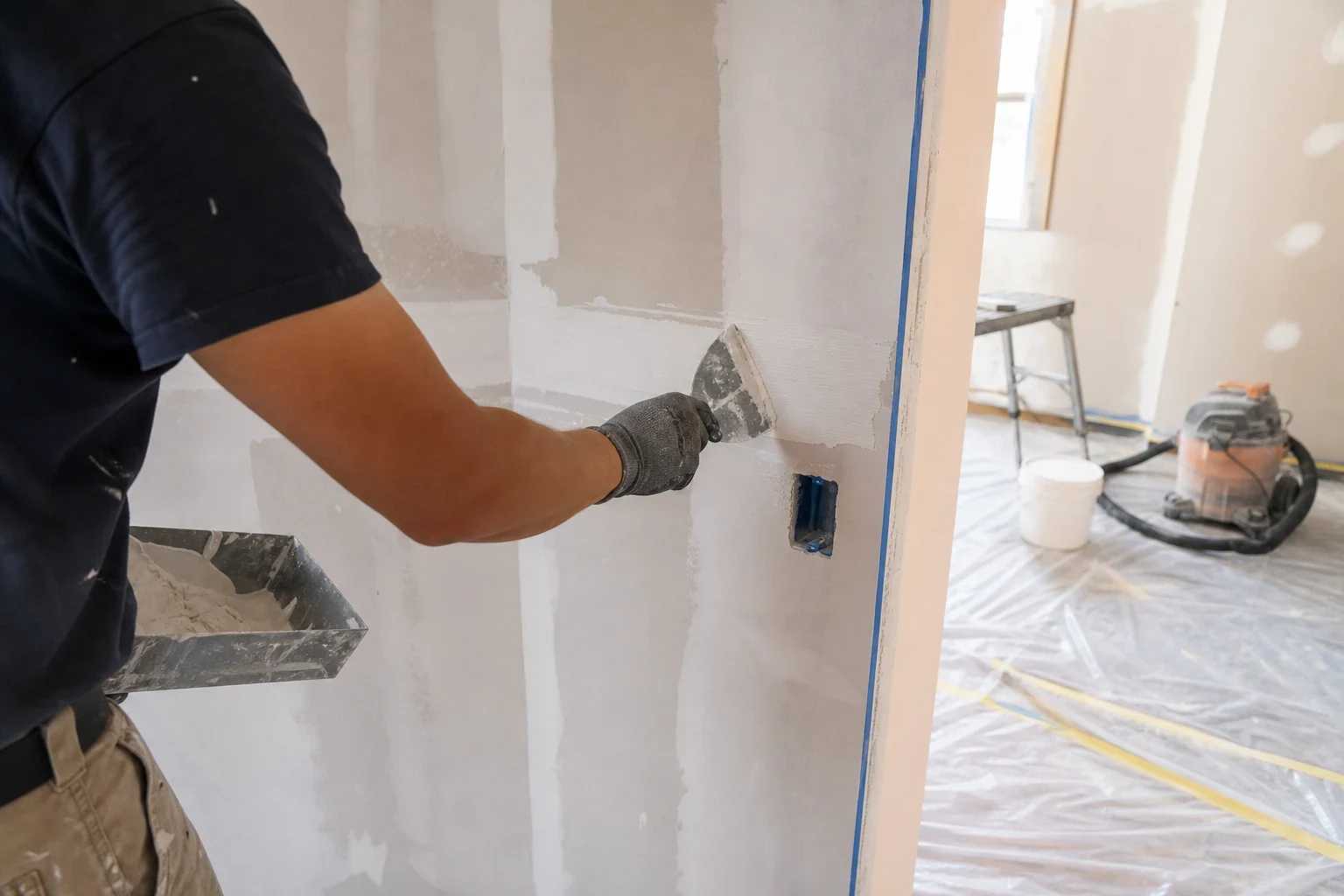
Before any cutting starts, we lay canvas runners along the path to the wall and pull nearby furniture back or wrap it in plastic. Doorways get taped-up sheeting during sanding, which keeps the dust inside the room we are working in.
- 4
Repair and finish
Damaged material comes out, the wall is rebuilt and backed, and joint compound goes on in thin coats with drying time between them. Most repairs need at least two visits because setting and finish coats need time to cure.
- 5
Cleanup and final photos
We vacuum, remove debris and leave a clean work area, then take after photos for your records.
What drives the price of a wall repair
The cost comes down to the wall material and what turns up once the surface is opened. After the inspection you get an estimate broken into line items, and if hidden damage changes the job, we show you photos and discuss it before going further.
- Plaster walls versus drywall
- Plaster takes more hands-on time, since it has to be reattached, shimmed and built up in several coats to its original thickness. Drywall is usually quicker to cut out and replace.
- How far the damage reaches
- One crack costs less than a whole section of wall that has wicked up water. Moisture often spreads well past the stain you can see.
- Surface texture and finish
- Smooth walls lit at a low angle by a window reveal every flaw, so they take more finishing passes than a textured wall.
- Reaching the wall and setting up
- Stairwells, tall walls and furnished rooms add time for setup and protection.
Wall repair questions
Something not covered here? (516) 518-4638
Will my insurance pay for the wall repair?
That depends on your policy and what caused the damage. Sudden events like a pipe bursting are often treated differently from slow leaks or wear. We cannot decide coverage, but we give you photos, measurements and a written description of the damage so your adjuster has clear information.
Should the leak be fixed before you repair the wall?
Yes. The source has to be stopped and the wall has to read dry before we close it up. Otherwise the new gypsum absorbs water and the compound fails or mold returns.
Can you repair plaster without replacing the whole wall?
In most cases, yes. Loose plaster can be reattached and cracks filled. We only recommend cutting out larger sections when the plaster has fully separated from the lath or is crumbling.
Why do cracks keep coming back in the same spot?
Usually because the wall is still moving there, often at a door or window header, and rigid filler cannot flex. We use mesh tape and setting compound, which holds far better than surface spackle.
How messy is the work?
Cutting and sanding make fine dust, so we cover floors, seal the room with plastic and use vacuum-assisted sanding where we can. We clean up at the end of every visit.
Get the wall fixed and the damage on record
Tell us what the wall looks like and what happened. We will explain the likely repair and how we document it for a claim, if you need one.